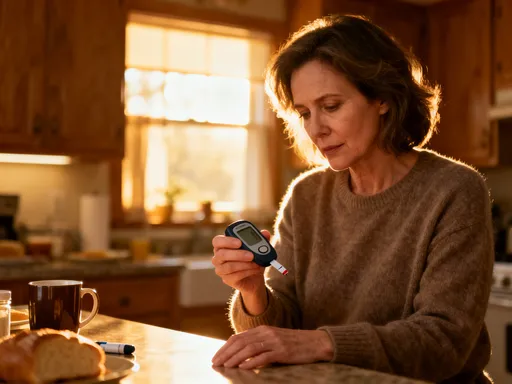
Why I Finally Got Serious About Tracking My Health — And What Changed
For years, I brushed off fatigue, mood swings, and irregular cycles as just part of being a woman. But when I started paying attention — really paying attention — everything shifted. Tracking my body’s patterns wasn’t just helpful; it became empowering. This is how I learned to listen to my body, spot red flags early, and take real control. It’s not about perfection — it’s about awareness, consistency, and showing up for yourself. What began as a simple habit of jotting down symptoms evolved into a deeper understanding of my health, one cycle, one night’s sleep, one mood shift at a time. And I’m not alone. Countless women are discovering that paying closer attention to their bodies isn’t obsessive — it’s necessary.
The Wake-Up Call: When Normal Didn’t Feel Normal Anymore
Many women grow up hearing that exhaustion, bloating, irritability, and irregular periods are simply part of womanhood. From adolescence onward, the message is often the same: endure, adapt, and carry on. For years, this normalization becomes second nature. A missed period? Probably stress. Persistent fatigue? Just busy life. Mood swings? Hormones — what can you do? But beneath this cultural acceptance lies a quiet but growing unease. The moment change begins is often not a crisis, but a realization: these symptoms don’t have to be the default. They might be signals — early warnings of imbalance, deficiency, or underlying conditions that have gone unnoticed.
Consider the woman in her mid-thirties who suddenly notices her cycles have shortened from a steady 28 days to erratic 21-day intervals. Or the mother of two who feels constantly drained, despite sleeping seven hours a night. These aren’t emergencies, but they’re not nothing either. The turning point comes when a woman stops dismissing her experience and starts questioning it. That shift — from acceptance to inquiry — is the first step toward empowerment. Research shows that women often wait longer than men to seek care for the same symptoms, and when they do, their concerns are more likely to be minimized. Systematic tracking interrupts this cycle by giving women concrete evidence of their experiences, transforming vague discomfort into measurable patterns.
This awareness is especially critical during transitional life stages — perimenopause, postpartum recovery, or after major illness — when the body undergoes significant changes. What once felt like normal fluctuations may now indicate a shift that requires attention. By tuning in earlier, women can avoid prolonged suffering and access support sooner. The wake-up call isn’t always loud. Sometimes it’s a whisper: This doesn’t feel right anymore. And that whisper, when honored, can lead to profound change.
What Is Systematic Health Monitoring — And Why It’s a Game-Changer for Women
Systematic health monitoring is the consistent, intentional practice of recording physical, emotional, and behavioral patterns over time. Unlike a single doctor’s visit, which captures a moment in time, tracking creates a timeline — a dynamic picture of how the body responds to hormones, stress, diet, sleep, and lifestyle. For women, this is particularly powerful. The female body operates on complex hormonal rhythms that influence everything from energy levels to digestion, mood to skin health. These fluctuations are not random; they follow patterns that, when observed, reveal valuable insights.
The value of tracking lies in establishing a personal baseline. Without knowing what’s normal for you, it’s difficult to recognize what’s not. A woman might assume that low energy in the week before her period is inevitable, but tracking could reveal that her fatigue coincides with poor sleep and low iron intake — factors she can address. Or she might notice that her mood dips consistently on certain days, prompting her to explore hormonal shifts or blood sugar imbalances. Over time, these observations build a narrative of health that is deeply personal and highly informative.
Medical professionals often rely on patient recall, which can be unreliable. Studies show that people remember symptoms inaccurately, especially when asked to reflect on patterns over weeks or months. But when a woman brings a detailed log — showing, for example, that her headaches occur every month between days 14 and 17 — clinicians can make faster, more accurate assessments. This isn’t about self-diagnosis; it’s about informed dialogue. Systematic monitoring turns the patient into an active participant in her care, transforming visits from one-sided consultations into collaborative partnerships.
Moreover, tracking supports preventive health. Small deviations — a slight change in cycle length, a dip in energy, a shift in digestion — can precede more serious conditions like thyroid dysfunction, polycystic ovary syndrome (PCOS), or nutrient deficiencies. Catching these early allows for earlier intervention, often through lifestyle adjustments before medication becomes necessary. In this way, health monitoring is not reactive — it’s proactive. It’s a commitment to long-term well-being, grounded in observation, not assumption.
Key Areas Every Woman Should Track (And Why They Matter)
Effective tracking isn’t about logging every possible detail — that can lead to burnout and overwhelm. Instead, it’s about focusing on key indicators that offer the most insight with the least effort. These core areas form the foundation of a meaningful health record: menstrual cycle patterns, energy levels, sleep quality, digestion, mood, skin changes, and response to physical activity. Each of these reflects underlying physiological processes and, when monitored together, paints a comprehensive picture of overall health.
The menstrual cycle is often the cornerstone of women’s health tracking. Recording start and end dates, flow intensity, and associated symptoms like cramping, bloating, or headaches helps identify regularity and potential imbalances. For example, consistently short cycles may suggest hormonal shifts, while missed periods could point to stress, low body weight, or thyroid issues. Tracking ovulation — through basal body temperature, cervical mucus, or ovulation predictor kits — can reveal whether ovulation is occurring regularly, which is crucial for fertility and long-term hormonal health. Irregular or absent ovulation may be an early sign of PCOS or other endocrine disorders.
Energy levels, recorded daily on a simple scale (e.g., 1 to 5), can expose patterns linked to sleep, nutrition, or hormonal fluctuations. A woman might notice that her energy crashes every afternoon, prompting her to examine her lunch choices or blood sugar regulation. Similarly, tracking sleep — including bedtime, wake time, interruptions, and how rested she feels — can uncover chronic sleep debt or disruptions related to stress, perimenopause, or lifestyle habits. Poor sleep doesn’t just affect mood; it influences hormone production, immune function, and metabolic health.
Digestive health is another vital area. Bloating, constipation, or discomfort after meals can indicate food sensitivities, gut imbalances, or hormonal influences. Many women experience worsened digestion during certain phases of their cycle due to progesterone’s effect on gut motility. Tracking these patterns helps distinguish between temporary discomfort and recurring issues that may require dietary or medical attention. Mood tracking, often overlooked, is equally important. Noting emotional states — irritability, anxiety, sadness, or calm — alongside cycle phase can reveal premenstrual syndrome (PMS) or premenstrual dysphoric disorder (PMDD), both of which are treatable but often underdiagnosed.
Skin changes, such as breakouts, dryness, or rashes, can reflect internal shifts. Acne around the jawline, for instance, may be hormonally driven and linked to androgen levels. Tracking when and where breakouts occur — and what else is happening in the body at that time — can guide more effective skincare and health strategies. Finally, monitoring how the body responds to exercise — recovery time, motivation, soreness — ensures that physical activity supports, rather than depletes, overall well-being. Overtraining can disrupt hormones and weaken immunity, so tracking helps maintain balance.
Tools That Work: From Pen-and-Paper to Apps (No Tech Snobbery Here)
One of the most empowering aspects of health tracking is that it doesn’t require expensive technology or specialized training. The best tool is the one that fits seamlessly into daily life and is used consistently. For some, that’s a simple notebook kept on the nightstand. For others, it’s a calendar with color-coded symbols or a spreadsheet that allows for data visualization. Digital apps have made tracking more accessible, offering reminders, charts, and insights — but they’re not the only option, nor always the best.
Paper-based methods offer privacy, simplicity, and control. There’s no risk of data breaches, no need for charging, and no learning curve. A woman can create her own system — a checklist, a grid, or free-form notes — tailored to her needs. The act of writing by hand can also enhance mindfulness, making the practice feel more intentional. However, paper tracking requires discipline; it’s easy to forget or fall behind. Without built-in reminders, consistency can wane over time.
Digital tools, including smartphone apps and wearable devices, address this by automating prompts and organizing data. Many apps allow users to log multiple health markers and generate reports that can be shared with healthcare providers. Some sync with fitness trackers to pull in sleep or activity data automatically. While convenient, these tools come with trade-offs. Privacy concerns are real — not all apps comply with health data regulations, and some may share information with third parties. Additionally, over-reliance on technology can lead to disconnection from bodily cues; a woman might ignore her actual energy level because her tracker says she’s “well-rested.”
The key is alignment with personal preferences. A tech-savvy user might thrive with an app that offers detailed analytics, while a minimalist might prefer a bullet journal. Spreadsheets offer a middle ground — customizable, private, and capable of trend analysis without constant connectivity. The goal isn’t to use the most advanced tool, but the most sustainable one. A well-maintained notebook is more valuable than a downloaded app that’s abandoned after a week. Flexibility is essential; a woman might start with paper and transition to digital, or use both in tandem. What matters is that the method supports, rather than complicates, the practice of awareness.
How Tracking Transforms Doctor Visits From Guesswork to Partnership
One of the most transformative benefits of health tracking is its impact on medical consultations. Too often, women leave appointments feeling unheard, dismissed, or misdiagnosed. Vague descriptions like “I feel tired all the time” or “my period is off” are easy to overlook or attribute to stress. But when a woman brings a clear, organized record — “My cycle has shortened from 30 to 24 days over the past three months, and I’ve had spotting between periods” — the conversation shifts. She’s no longer guessing; she’s presenting evidence.
This data-driven approach fosters more productive discussions. Clinicians can identify patterns that might otherwise go unnoticed, leading to earlier and more accurate diagnoses. For example, tracking might reveal that a woman’s migraines occur consistently in the estrogen drop after ovulation, suggesting a hormonal component that could be managed with targeted interventions. Or it might show that digestive issues flare up during the luteal phase, pointing to a link between progesterone and gut function.
Moreover, tracking builds credibility. When a patient arrives with detailed observations, she signals that she is engaged and informed. This encourages doctors to take her concerns seriously and collaborate on solutions. Instead of relying solely on lab tests — which capture only a snapshot — providers can consider the full context of symptoms over time. This is especially valuable for conditions like thyroid disorders, adrenal fatigue, or autoimmune diseases, where symptoms fluctuate and may not show up on standard tests.
Tracking also supports shared decision-making. When a woman understands her patterns, she can participate more fully in treatment planning. If she knows that her energy crashes every afternoon, she might work with her doctor to test for blood sugar imbalances or anemia. If she sees that her mood dips consistently in the week before her period, she might explore lifestyle changes or discuss the possibility of PMDD. This partnership model leads to more personalized, effective care — care that respects the patient’s lived experience.
Avoiding the Pitfalls: When Tracking Becomes Stress, Not Support
While tracking can be empowering, it’s not without risks. For some, the practice can shift from helpful to harmful — turning into an obsession that fuels anxiety rather than insight. This is especially true for women prone to perfectionism or health anxiety. The goal of tracking is not to achieve flawless data, but to gain understanding. When the focus shifts from patterns to individual numbers — “My sleep score was 72 last night, not 80” — the practice can undermine well-being instead of supporting it.
One common pitfall is over-monitoring. Logging every symptom, every meal, every mood shift can become overwhelming and time-consuming. It can also lead to hypervigilance, where a woman begins to interpret every minor fluctuation as a problem. This constant self-scrutiny can increase stress, which ironically worsens the very symptoms she’s trying to manage — such as poor sleep or digestive issues. The body responds to stress, and chronic anxiety about health can disrupt hormonal balance and immune function.
Another risk is misinterpreting data. Without medical training, it’s easy to jump to conclusions. A shorter cycle might suggest a thyroid issue — or it might simply reflect a temporary change due to travel or illness. A single night of poor sleep doesn’t mean insomnia. Tracking should inform, not alarm. It’s essential to view data in context and avoid self-diagnosis. When concerns arise, the next step should be consultation with a healthcare provider, not a deep dive into online symptom checkers.
To prevent tracking from becoming a source of stress, it’s important to set boundaries. This might mean checking in once a day, not hourly, or focusing on one or two key areas instead of tracking everything at once. It also means being kind to oneself when data isn’t “perfect.” Missing a few days of logging doesn’t invalidate the entire effort. Stepping back when anxiety rises is not failure — it’s self-care. The practice should serve the woman, not the other way around.
Making It Stick: Building a Realistic, Sustainable Routine
Consistency is the cornerstone of effective health tracking, but it doesn’t require perfection. The most successful routines are those that are simple, integrated, and forgiving. The key is to start small — perhaps by tracking only cycle dates for the first month, then adding energy levels the next. This gradual approach prevents overwhelm and builds confidence. Pairing tracking with an existing habit — like logging symptoms with morning coffee or noting sleep quality right before bed — increases the likelihood of adherence.
Weekly reviews, rather than daily analysis, help maintain perspective. Instead of fixating on single data points, a woman can look for trends over time. Did her energy improve after adjusting her bedtime? Did bloating decrease when she reduced dairy? These insights emerge gradually, reinforcing the value of the practice. Celebrating small wins — like noticing a pattern or sharing useful data with a doctor — strengthens motivation.
Flexibility is also crucial. Life changes — travel, illness, busy seasons — and tracking should adapt, not disappear. A missed week doesn’t mean starting over; it means resuming when possible. The goal is progress, not perfection. Over time, tracking becomes less of a chore and more of a natural part of self-care, like brushing teeth or meal planning.
Support can also enhance sustainability. Sharing the journey with a trusted friend, partner, or support group can provide encouragement. Some women find value in working with a health coach or nutritionist who can help interpret data and suggest adjustments. Others prefer solitude, finding empowerment in the private act of self-observation. Both approaches are valid. What matters is that the practice feels meaningful and manageable.
Conclusion
Health monitoring isn’t about fixing flaws — it’s about honoring your body’s story. For women, whose health is often minimized or misunderstood, this practice is quietly revolutionary. It turns invisible patterns into visible insights, transforming confusion into clarity. By tracking systematically, you’re not just collecting data — you’re reclaiming agency, one observation at a time. You’re saying, My experience matters. My body speaks, and I’m learning to listen. This isn’t about achieving some ideal state of wellness, but about building a deeper, more informed relationship with yourself. In a world that often asks women to push through discomfort, tracking is an act of resistance — a way to pause, pay attention, and respond with care. And in that simple act, profound change begins.