How I Upgraded My Balance Without Fancy Gear
Balance isn’t just for athletes—it’s a daily necessity. I used to wobble stepping off curbs and felt unsteady hiking trails. After diving into a systematic approach, I noticed real improvement. It wasn’t magic, just consistent, science-backed moves. Stronger balance changed how I move, think, and live. This is how I optimized mine—and how you can too.
The Hidden Crisis of Poor Balance
Most people don’t realize how quietly balance deteriorates over time. Unlike strength or endurance, poor balance doesn’t announce itself with pain or fatigue—it creeps in silently. One day, you miss a step on the stairs. Another time, you feel a sudden wobble getting out of the car. These small stumbles are not just embarrassing; they’re warning signs. Modern life, with its long hours of sitting and lack of varied movement, actively weakens the systems that keep us upright. The body adapts to stillness, and when it’s suddenly asked to respond to uneven terrain or quick shifts in weight, it falters.
The consequences go beyond momentary instability. Reduced balance increases the risk of falls, especially as we age. According to public health data, falls are a leading cause of injury among adults over 50, often resulting in fractures, hospital visits, and a loss of independence. But even before reaching that stage, subtle balance issues affect daily confidence. Women in their 30s, 40s, and 50s report feeling less steady during workouts, on walks with family, or while carrying groceries. This quiet erosion of stability can lead to avoidance—steering clear of trails, skipping active outings, or hesitating to try new physical activities.
What makes this decline so insidious is that it happens gradually. The body’s ability to sense its position in space—known as proprioception—diminishes without regular challenge. Muscles in the feet, ankles, and core weaken from disuse. Joints lose their fine-tuned responsiveness. Over time, the brain receives fewer signals about body position, making reactions slower and movements less coordinated. The result is a feedback loop: less movement leads to poorer balance, which leads to even less movement. Breaking this cycle starts with awareness—recognizing that balance is not fixed, but trainable.
Why Balance Matters More Than You Think
Beyond preventing falls, balance is a cornerstone of overall physical health. It’s not just about standing on one leg; it’s about how efficiently your body coordinates movement, maintains posture, and responds to changes in environment. Good balance enhances walking mechanics, reduces strain on joints, and improves coordination during everyday tasks like reaching for a high shelf or turning quickly to answer the door. When balance is strong, movements feel smoother, more controlled, and less effortful.
Scientific research shows that balance is closely linked to neural function. The brain constantly processes sensory input to maintain equilibrium, which means balance training also engages cognitive skills like focus, spatial awareness, and reaction time. This mind-body connection explains why people who practice balance exercises often report feeling more alert and present. It’s not just physical—it’s mental clarity supported by bodily stability.
Long-term, maintaining good balance contributes to greater independence and quality of life. Studies have found that individuals with better balance tend to remain active later into life, participate more in social and recreational activities, and experience fewer mobility limitations. For women managing busy households, careers, and family responsibilities, staying physically capable is essential. Strong balance supports everything from playing with grandchildren to managing household chores without strain. It’s not about athletic performance—it’s about preserving the ability to do what matters most, safely and confidently.
Breaking Down Balance: The Three Key Systems
Balancing isn’t a single skill—it’s the result of three major systems working together: the vestibular system in the inner ear, visual input from the eyes, and somatosensory feedback from the muscles and joints. Think of them as a tripod supporting a camera: remove one leg, and the whole structure becomes unstable. Each system provides critical information that the brain uses to keep the body upright and oriented in space.
The vestibular system detects motion and head position. Located in the inner ear, it senses gravity and movement, helping you know whether you’re upright, tilting, or turning. When this system is impaired—such as during dizziness or vertigo—balance suffers immediately. However, even minor inefficiencies, like those caused by prolonged sitting or lack of movement variety, can dull its responsiveness over time.
Visual input is the second pillar. Your eyes constantly scan the environment, providing real-time data about your position relative to surrounding objects. This is why standing on one leg is harder with eyes closed—your brain loses a key reference point. In everyday life, good vision helps you navigate stairs, avoid obstacles, and adjust to changing surfaces. Yet, many people overlook how much they rely on sight for stability until they’re in low-light conditions or distracted environments.
The third component—somatosensory feedback—comes from pressure receptors in the feet, ankles, and joints. These sensors tell the brain where each part of the body is in space, even without looking. Wearing thick-soled shoes or walking only on flat, predictable surfaces reduces this feedback, weakening the connection between feet and brain. Over time, this leads to “sensory deprivation” for balance, making the body less responsive to subtle shifts in weight or terrain. Training all three systems ensures a resilient, adaptable balance that functions well in real-world conditions.
My Systematic Approach to Daily Balance Training
I didn’t start with complex routines or expensive classes. My progress came from a simple, consistent approach built around three types of exercises: static holds, dynamic movements, and mindful transitions. The key wasn’t intensity—it was regularity. Just five to ten minutes a day, done with focus, made a measurable difference within weeks.
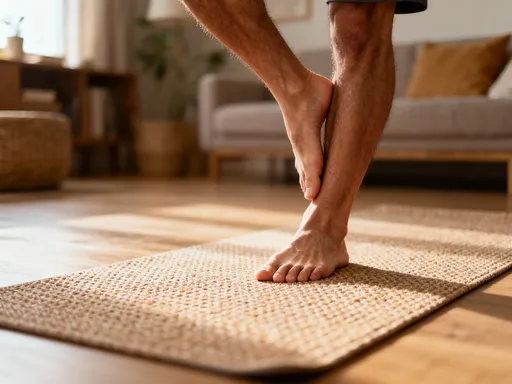
Static holds form the foundation. These are exercises where you maintain a position without movement, teaching the body to stabilize under control. The most effective for me was the single-leg stand. At first, I could barely hold it for 15 seconds without wobbling. I started near a countertop for light support, focusing on keeping my hips level and my core gently engaged. Over time, I increased the duration and removed hand support. I also added variations—standing on a folded towel or closing my eyes—to challenge different balance systems.
Dynamic movements introduced controlled motion. These include step-overs, where I slowly lifted one knee and stepped over an imaginary line, or heel-to-toe walking along a hallway. These exercises mimic real-life actions like climbing curbs or navigating uneven paths. They require coordination between legs, core, and sensory systems, making them highly functional. I practiced them slowly at first, emphasizing precision over speed, which helped build neural pathways for smoother movement.
Mindful transitions were the most revealing. These involve shifting weight gradually from one foot to the other, or moving from sitting to standing with control. I began paying attention to how I rose from a chair—was I pushing off with my hands? Was one leg doing more work? By slowing down and focusing on symmetry, I noticed imbalances I hadn’t been aware of. These small corrections improved not just balance, but overall movement quality. Together, these three components created a well-rounded routine that addressed stability from multiple angles.
Simple Tools That Actually Help (No Gym Needed)
You don’t need a balance board or a fancy studio to train effectively. Some of the most useful tools are already in your home. A folded bath towel, for example, can serve as a mini balance pad. Standing on it destabilizes your base slightly, forcing your feet and ankles to work harder. A foam cushion from the couch or a yoga mat with textured surface also works well. The goal is to introduce slight instability, not extreme challenge.
Changing surface texture is a powerful way to train somatosensory feedback. Try going barefoot on different surfaces—carpet, tile, grass, or even a pebble mat if you have one. Each surface sends unique signals to your feet, enhancing neural communication. Walking barefoot around the house for a few minutes each day can reawaken dormant sensory pathways. If you’re concerned about cleanliness, a thin, textured insole inside your shoe can offer similar benefits.
Altering visual input is another low-cost strategy. Closing your eyes during a single-leg stand removes reliance on sight, forcing the vestibular and somatosensory systems to compensate. Start with light hand support and short durations—five to ten seconds is enough at first. You can also try focusing on a fixed point, then slowly turning your head side to side while maintaining balance. This challenges the vestibular system in a safe, controlled way.
It’s important to avoid gimmicks. The market is full of balance gadgets promising quick results, but many lack scientific backing. Instead of chasing novelty, focus on consistency and progression. Use what you have, increase difficulty gradually, and prioritize form over duration. A $20 foam pad may be helpful, but standing on your bathroom rug with eyes closed delivers similar benefits. The real tool is your attention—training balance is as much about mindfulness as it is about physical effort.
Integrating Balance Into Everyday Life
The most sustainable progress came not from dedicated workouts, but from weaving balance practice into daily routines. This concept, known as habit stacking, involves attaching a new behavior to an existing one. For example, I started brushing my teeth on one leg. At first, it felt awkward, but within days, it became automatic. This simple act provided two minutes of focused balance training twice a day—no extra time required.
Other opportunities emerged throughout the day. While waiting for the kettle to boil, I’d shift my weight slowly from heel to toe. During phone calls, I’d stand instead of sit, occasionally lifting one foot slightly off the floor. Walking became an opportunity too—I practiced heel-to-toe steps down the hallway, or varied my path to include small detours over rugs or thresholds. These micro-movements added up, reinforcing balance in functional, real-world contexts.
At work, especially if seated for long periods, I made a habit of standing every hour. Even brief standing breaks help reactivate postural muscles. I also experimented with a raised workspace—using a countertop or stack of books—to stand while reading or organizing. Standing engages core and leg muscles more than sitting, supporting both balance and circulation.
Family activities became training opportunities too. Walking with children or pets on trails, navigating parks with roots and slopes, or playing backyard games all challenge balance naturally. Instead of avoiding uneven terrain, I began seeking it out—gravel paths, grassy fields, or wooden boardwalks. These environments provide rich sensory input, far more effective than flat gym floors. By reframing daily movement as practice, balance training stopped feeling like a chore and became part of living well.
Tracking Progress and Staying Motivated
Improvement in balance is often subtle, but it’s measurable. I started tracking simple metrics: how long I could stand on one leg with eyes open, then closed; how steady I felt on familiar trails; how often I caught myself wobbling during daily tasks. At first, I could hold a single-leg stand for 20 seconds. After six weeks of daily practice, I reached 60 seconds—unassisted and steady. The change wasn’t dramatic, but the confidence it brought was.
Other signs of progress were qualitative but just as meaningful. I noticed I no longer grabbed the handrail on every stair. I felt more stable getting in and out of the car. Hiking became more enjoyable—less focus on footing, more on the scenery. These small wins reinforced the value of consistency. I learned that balance isn’t about perfection; it’s about gradual adaptation. The body responds to regular input, even in small doses.
Motivation came from framing balance as a lifelong investment. Unlike short-term fitness goals, balance doesn’t peak and plateau—it evolves with your habits. Some days were harder than others, especially when tired or stressed. On those days, I scaled back but didn’t skip. Even 30 seconds of mindful standing counted. This flexibility prevented burnout and kept the practice sustainable.
I also reminded myself that balance is more than physical—it’s a form of self-care. Taking time to stand still, focus on alignment, and tune into bodily signals created moments of calm in a busy day. It became a quiet ritual, a way to reconnect with my body. Over time, this mindfulness spilled over into other areas—better posture, reduced tension, greater awareness of movement habits. The benefits compounded, not just in stability, but in overall well-being.
Strong balance isn’t about showy stunts—it’s quiet confidence in your body’s ability to move safely and smoothly. By treating it as a trainable, essential function, you unlock better movement, sharper focus, and greater freedom. This isn’t a quick fix but a long-term upgrade. Start small, stay consistent, and let your body adapt naturally.