Tracked 300 Family Memories Over 5 Years: This Simple System Keeps Them Alive
Have you ever lost a precious moment—your child’s first words, a grandparent’s story, a birthday laugh—just because it wasn’t saved the right way? I used to, until I started pairing everyday tech with small, intentional habits. It wasn’t about fancy gadgets, but about creating a system that felt natural, warm, and deeply personal. Now, my family reconnects with those moments anytime, anywhere—and it’s changed how we remember each other. What began as a quiet worry about forgetting has become a meaningful practice that’s brought us closer, calmer, and more connected. And the best part? You don’t need to be tech-savvy. You just need to care—and be willing to start small.
The Moment That Changed Everything
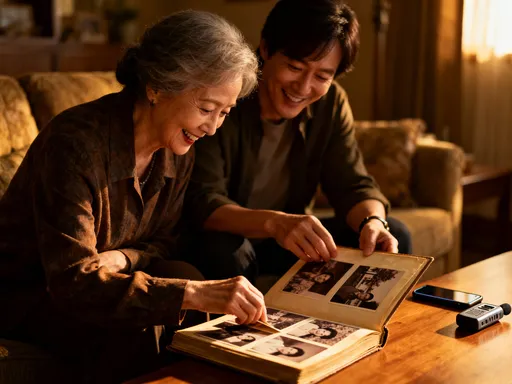
It was a rainy Sunday afternoon, the kind where time slows down and the house feels extra quiet. My mother, now in her late seventies, sat beside me on the couch, holding an old photo album that had seen better days. The corners were curled, the pages yellowed, and some of the photos had slipped loose over the years. We were flipping through it together, laughing at my dad’s terrible 80s haircut and marveling at how much my son looked like him as a toddler. Then she paused on a black-and-white picture of my father as a young man, standing in front of an old car. Her voice softened. “I wish your kids could’ve known him like I did,” she said. “Not just from pictures—but from his voice, his laugh, the way he told stories.”
Something in me cracked open. I realized we had hundreds of photos, but no recordings of his voice. No video of him teaching me to ride a bike, no audio of him singing in the kitchen. The memories existed in my mind, but they were fading—fragile, like old film left in the sun. And I knew that when my mother was gone, so much of that history would go with her. That moment wasn’t just sad; it was urgent. I didn’t want my children to grow up wondering who their grandfather really was. I wanted them to feel his presence, even if they never met him.
So I made a promise—to myself, to my family—that I would find a better way to preserve not just images, but moments. Not perfectly, not all at once, but steadily. I didn’t want a digital graveyard of forgotten files. I wanted a living archive, full of emotion, voice, laughter, and love. That night, I started writing down ideas. Not technical ones, but human ones: What moments matter most? How can we make remembering part of how we live? The answer wasn’t in buying the latest gadget. It was in building a simple, repeatable system that honored the heart of memory—connection.
Why Most People Lose Their Memories (Without Realizing It)
We live in a world where we capture more than ever. Our phones are full of videos, our cloud storage overflowing with photos, and our notes apps packed with voice memos. And yet, so many of us still feel like we’re losing our past. I used to think it was because I didn’t have enough space or the right tools. But the truth is, the problem isn’t storage—it’s structure. We save everything, but we don’t organize with intention. We rely on hope: “I’ll look at these someday.” But someday rarely comes.
Think about your last family vacation. You probably took dozens of photos and a few videos. Maybe you even posted a few on social media. But where are they now? Buried in your phone’s camera roll, lost in a sea of screenshots and grocery lists. And what about the things you didn’t capture? The way your daughter described the seagulls at the beach, the joke your sister made during dinner, the sound of your mom humming while she folded laundry. Those aren’t in any album. They’re slipping away, not because we don’t care, but because we don’t have a way to hold onto them.
I learned this the hard way. A few years ago, I tried to find a video of my son’s first birthday. I remembered the blue cake, the tiny hat, the way he smashed his hands into the frosting. But after 20 minutes of scrolling, I gave up. It was there somewhere—but I couldn’t find it. That frustration turned into something deeper: grief. Not for the video, but for the moment. Because if I couldn’t find it, did it really exist? That’s when I realized: saving isn’t the same as preserving. Preservation means making memories easy to find, feel, and share. It means building a system that works with your life, not against it. And it starts with one simple truth—memory is not a tech problem. It’s a human one.
How Health Data Tools Inspired a Memory Revolution
It sounds strange, I know—but my breakthrough came from a fitness tracker. Not because I suddenly cared about step counts, but because I noticed how it made data feel personal. Every morning, my app showed me my sleep quality, my heart rate trends, even my stress levels. It didn’t just store numbers; it told a story. Over time, I could see patterns—how I slept better after walks, how my mood improved when I stayed hydrated. The data wasn’t cold; it was warm with meaning.
That’s when it hit me: What if we treated family memories the same way? Instead of just saving videos, what if we tracked the emotional heartbeat of our lives? Not with algorithms, but with intention. I didn’t want analytics—I wanted insight. I wanted to know when we laughed the most, who told the best stories, which traditions brought us together year after year.
So I started experimenting. I began tagging our videos and voice notes not just by date or name, but by mood: “joyful,” “quiet,” “nostalgic.” I added context: “Grandma’s kitchen,” “rainy afternoon,” “first snow.” Slowly, a timeline emerged. I could click on a month and see not just what happened, but how it felt. One winter, I noticed we had six recordings of my father-in-law telling the same fishing story—each time with slightly different details, each time making us laugh. When he passed away, that timeline became a gift. We could go back and hear his voice, not just once, but many times, in different moods, different moments.
Technology didn’t create those memories—but it helped us see them more clearly. Just like my health app showed me patterns in my body, this simple tagging system revealed patterns in our relationships. And that changed everything. Because now, remembering wasn’t just about looking back. It was about understanding who we are, together.
Building Our Family Memory Hub: No Tech Degree Needed
You might think this sounds complicated. But the truth is, I’m not a tech expert. I don’t code. I don’t own a smart home. What I do have is a phone, a laptop, and a few free apps. That’s all you need to start. My system began with three simple tools: a shared cloud folder, a voice recording app, and a monthly family ritual. That’s it.
Every Sunday, after dinner, we gather in the living room. No pressure, no performance. We call it “Memory Time.” Someone shares a photo, a video, or a story. Sometimes it’s me pulling up a clip from last summer. Other times, my daughter sings a song she learned at school, and I record it right then. We upload it to our shared folder—named “Family Heart”—and add a few tags. That’s the whole routine. It takes less than ten minutes, but over five years, it’s added up to more than 300 preserved moments.
The folder is organized by year and season, not by strict rules. January to March is “Winter Warmth,” April to June is “Spring Laughter,” and so on. Inside each, we have subfolders: “Voices,” “Videos,” “Letters,” “Art.” Nothing is perfect—some files are mislabeled, some recordings are fuzzy. But that’s okay. The mess is part of the memory. What matters is that we’re doing it together. My teenage nephew now helps digitize my mother’s old letters. My sister adds holiday recipes in voice notes, so we can hear her laugh when she says, “Don’t burn the pie this time!”
And here’s the secret: it’s not about the tech. It’s about the ritual. The app doesn’t matter as much as the habit. Whether you use Google Drive, iCloud, or Dropbox, the power comes from showing up, again and again, to say: This moment mattered. You mattered. We mattered.
Turning Data Into Meaning: The Power of Tags and Timelines
Let’s talk about file names for a second. How many of your photos are called “IMG_4582.jpg”? I used to think that was normal. But then I realized: a name like that tells you nothing. It doesn’t tell you who’s in the photo, why it was taken, or how it felt. So I started renaming files with heart, not randomness. Instead of “Video123,” I wrote “Dad’s Joke at Thanksgiving – Everyone Laughing.” Instead of “Audio_001,” I labeled it “Mom’s Story About Meeting Dad – Rainy Night.”
Then I added tags—simple words that describe the feeling, the people, the place. A video of my son riding a bike might have tags like “first time,” “proud,” “sunny day,” “Grandpa cheering.” Over time, these tags became a map. I could search “Grandpa cheering” and instantly find every moment he encouraged someone. I could click “proud” and see a timeline of our family’s proudest moments—learning to swim, finishing a school project, baking a cake without help.
This wasn’t just convenient—it was healing. When my father-in-law passed, we gathered around the laptop and searched “Dad’s laugh.” We watched clip after clip, crying and laughing at the same time. One video showed him trying to dance in the kitchen, slipping on a wet floor, and laughing so hard he couldn’t breathe. That moment wasn’t in any photo album. But because I’d tagged it with “joy” and “family dance,” we found it. And it brought him back, just for a little while.
Technology didn’t replace our grief—but it gave us something to hold. The tags didn’t make the pain go away, but they made the love feel closer. And that’s the real power of this system: it turns data into feeling. It helps us see not just what we did, but who we were in those moments.
How Our Community Joined In—And Why It Mattered
One day, I mentioned Memory Time to my neighbor, Susan, over the fence. She’s in her sixties, sharp as a tack, and has three grown kids who live far away. She looked at me with tears in her eyes and said, “I have boxes of old photos in the attic. I don’t even know who half the people are anymore.” I invited her over, we scanned a few photos, and I showed her how to tag them. Two weeks later, she brought a friend. Then another. Soon, we had a group of six women meeting once a month at the community center.
We called it “Memory Circle.” No agenda, no pressure. Just women bringing old photos, letters, home videos, and helping each other preserve them. Some of us used phones, some used tablets, some just wrote notes. We shared stories as we scanned. One woman found a letter from her late husband and read it out loud—his words still full of love, fifty years later. Another discovered a video of her daughter’s first steps, which she hadn’t seen in decades. There were tears, yes—but also so much laughter.
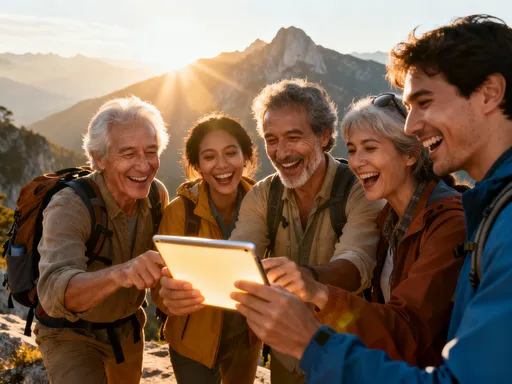
What surprised me most was how it brought generations together. Younger members of the group started interviewing their parents and grandparents, recording their voices, asking about old traditions. One teenager digitized her grandmother’s recipe book, adding audio clips of her explaining how to make dumplings. The tech wasn’t fancy—but the connection was deep. We weren’t just saving memories. We were building bridges between past and present, between loneliness and belonging.
And here’s the beautiful part: it didn’t require money, expertise, or perfection. It just required care. The tools were simple. The heart was everything.
A Life That Feels Fuller, Because Nothing Is Truly Lost
Today, my life feels different. Not because I’ve done something extraordinary, but because I’ve learned to honor the ordinary. The way my mother stirs her tea. The sound of my son saying “I love you” before bed. The way my sister rolls her eyes when I tell the same story twice. These aren’t grand events—but they’re the fabric of our family. And now, they’re preserved.
My children ask to watch old videos like they’re movies. “Can we see Great-Aunt Lily dancing in the rain?” my daughter will say on a gray afternoon. And we do. We laugh, we cry, we remember. These moments aren’t frozen in time—they’re alive, part of our daily rhythm. When someone is sick, we watch happy clips to lift our spirits. When we’re arguing, we pull up a video of us laughing together and remember what really matters.
This system hasn’t made me perfect. I still forget to record things. I still have unsorted files. But I’ve stopped fearing loss. Because I know that even if I can’t remember every detail, the heart of it is saved. And when grief comes—as it does for all of us—I don’t feel empty. I feel full. Full of voices, full of love, full of moments that time can’t take.
Technology didn’t give me these memories. Life did. But tech helped me keep them close. It turned chaos into clarity, loss into legacy. And it taught me that love isn’t just something we feel—it’s something we can preserve. Not in perfection, but in pieces. In laughter, in voices, in the quiet moments between the big ones.
So if you’ve ever worried about forgetting, I want you to know: it’s not too late. Start small. Save one voice note. Tag one photo with feeling. Share one memory with someone you love. You don’t need to be a tech expert. You just need to care. Because the most powerful tool you have isn’t an app or a cloud drive. It’s your heart. And when you let it lead, the rest will follow.